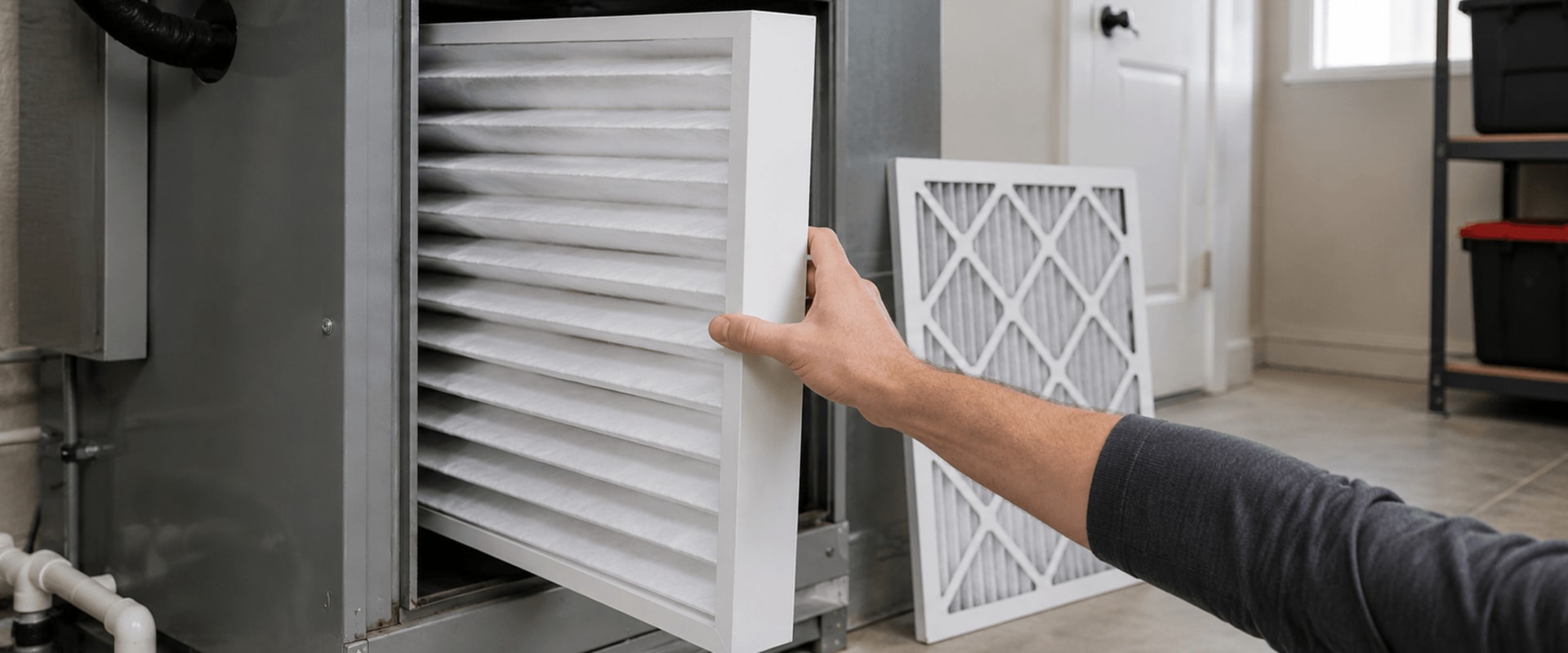
MERV 13 16x30x4 Air Filters And Static Pressure
Duct-cleaning work offers a vantage point most filter advice never draws on. We open the system after the filter has done its job and see precisely what got through, and that view is what convinced me the standard MERV 13 warning targets the wrong variable.
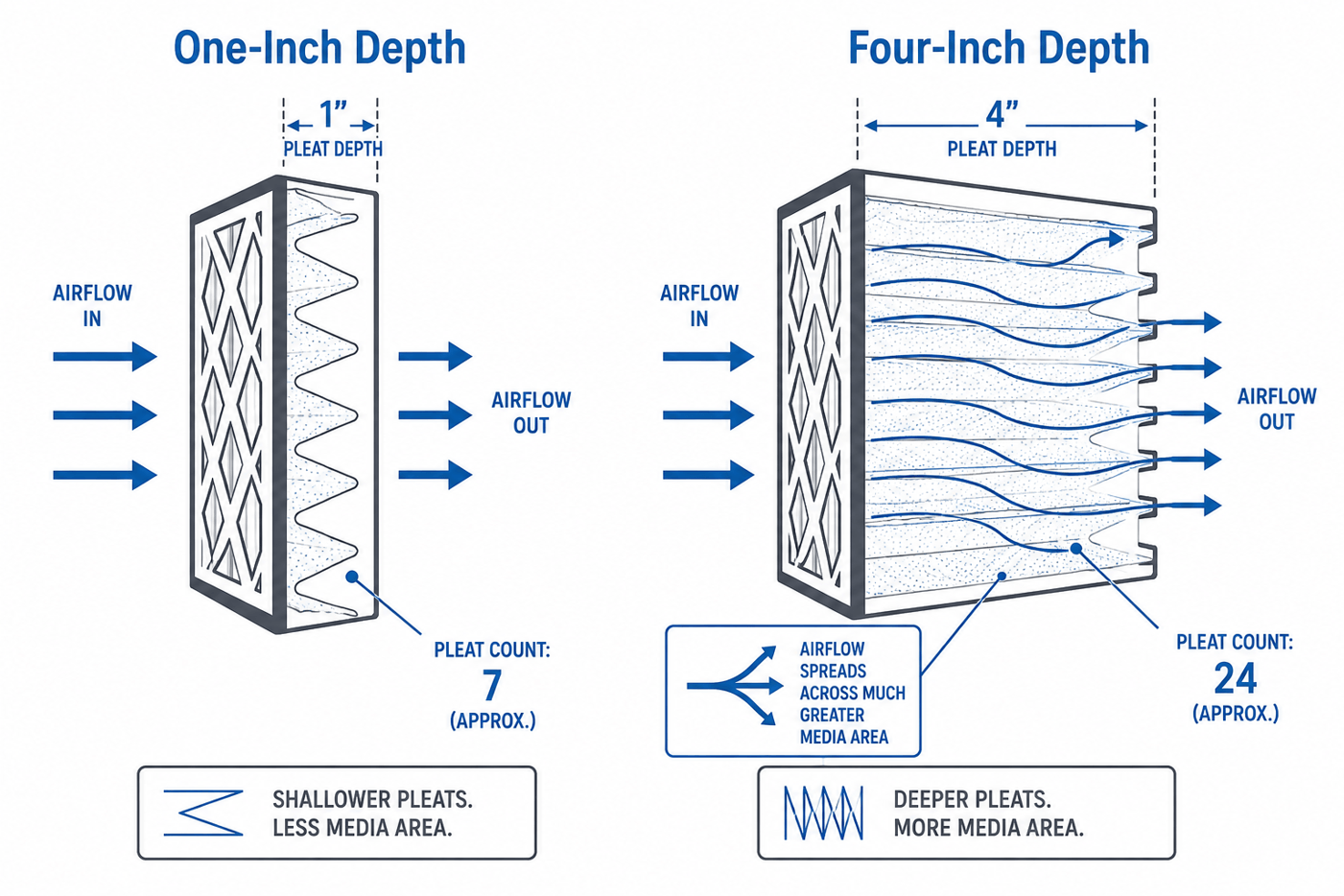
The warning was born at one-inch slots, where dense media genuinely can choke a blower. Homeowners then carry it over to four-inch racks, which behave differently. A 16x30x4 panel spreads airflow across roughly four times the pleated media, so resistance falls as area grows. EPA states that most systems accommodate MERV 13 without equipment problems when the filter gets changed on schedule.
One static pressure reading tells you which group your system belongs to.
TL;DR
A MERV 13 filter in a 16x30x4 size rarely restricts airflow in a healthy residential system, because the four-inch depth gives the media roughly four times the surface area of a one-inch filter at the same rating. EPA guidance states that most furnaces and HVAC systems handle MERV 13 without equipment problems as long as the filter is replaced on schedule. The real airflow risks are undersized return ducts, a fouled blower or coil, and leaving any filter in past its service life. Measure total external static pressure before and after the swap to know for certain.
Key Takeaways
Filter depth affects airflow resistance more than the MERV rating does. A four-inch MERV 13 filter typically produces a lower pressure drop than a one-inch MERV 13 filter built from the same media.
EPA states that most furnaces and HVAC systems can accommodate a MERV 13 filter without creating equipment problems, provided the filter is replaced frequently.
A 16x30x4 label is nominal. The actual panel measures 15.5 by 29.5 by 3.75 inches, and that is the dimension that has to fit your rack.
Total external static pressure settles the question for your specific system. Air handler data plates list a maximum rated value, commonly near 0.5 inches water gauge.
A loaded filter, not a high MERV rating, causes most filter-related airflow complaints in the field.
The Short Answer
No, not in most homes. Depth drives airflow resistance more than the MERV rating does. A four-inch MERV 13 filter spreads airflow across far more pleated media than a one-inch filter, so face velocity and pressure drop both fall. Systems that do struggle almost always have a pre-existing restriction, such as undersized returns or a fouled evaporator coil.
Does A MERV 13 Filter Restrict Airflow In A Home HVAC System?
In most homes, no. MERV describes capture efficiency, not resistance. Two filters carrying the same MERV rating can produce very different pressure drops depending on media depth, pleat count, and fiber construction. EPA advises homeowners to select a filter rated at least MERV 13, or as high a rating as the system fan and filter slot will accommodate.
Start with what the object actually is. An air filter is a device that removes particulates from an airstream by trapping them on fibrous or porous media. MERV rates how well a given one performs that job. How much resistance the panel adds is a separate measurement entirely.
MERV comes from the ASHRAE 52.2 test standard, which measures how much of a particle stream a filter captures across defined size ranges. Nothing in that number describes how hard your blower has to work. Resistance is measured separately, as pressure drop across the filter face, and it depends heavily on how much media the manufacturer packed into the panel.
EPA also sets the performance floor for this rating tier. Filters at MERV 13 and above are required to demonstrate at least 50 percent removal efficiency for the smallest particles tested, which is the range that includes PM2.5 from cooking, wildfire smoke, and traffic.
The caveat is real but narrow. EPA notes that some residential systems may lack the fan or motor capacity for higher efficiency filters, and recommends consulting a professional HVAC technician when you cannot tell. That is a question about your specific equipment, not about MERV 13 as a category.
Open enough systems and the pattern becomes obvious. The resistance a blower fights is never evenly distributed, and the filter is rarely the largest share of it. Pull a return grille, and you can often feel where the restriction actually sits, in a return too small for the tonnage or a filter rack cut into a plenum with almost no clearance behind it. Neither of those has anything to do with the number printed on the filter box.
Why A Four-Inch Filter Changes The Airflow Math
A 16x30x4 filter holds roughly four times the pleated media of a one-inch filter with the same face dimensions. Air spreads across that larger area, so velocity through any given square inch of media drops. Lower velocity means lower resistance, which is why depth offsets much of the penalty that comes with a higher MERV rating.
This is the single most misunderstood point in the whole MERV debate. Homeowners compare a one-inch MERV 8 against a one-inch MERV 13 and conclude that high MERV chokes systems. The fairer comparison is a one-inch MERV 13 against a four-inch MERV 13, and those two behave nothing alike.
This site has made a version of the point before. An earlier look at filter upgrades versus duct cleaning noted that a deeper filter carries more surface area and traps more particulate without restricting airflow. The same physics holds at four inches.
EPA makes the mechanism explicit in its technical summary on residential air cleaners. As filter depth and pleating increase, the area of the filtration medium increases with them, which helps offset the added resistance of higher-efficiency media. The same document notes that deeper filters often carry an extended service life for the same reason.
There is a tell for this in the field, visible the moment a spent panel comes out. A loaded one-inch filter is grey the whole way through, because its entire depth of media has been carrying the load. Pull a four-inch panel on the same interval and the upstream pleats hold most of the dust while the downstream side still looks close to new. That unused depth is the surface area advantage made visible, and it is the same reason the deeper panel still has service life left when the thin one is finished.
Filterbuy is a U.S. air filter manufacturer that produces pleated MERV-rated HVAC filters at its Talladega, Alabama plant and sells more than 600 sizes direct to consumers. It builds the 16x30x4 in a nominal four-inch depth with an actual panel size of 15.5 by 29.5 by 3.75 inches. EPA Residential Air Cleaners, A Technical Summary, 3rd Edition guidance states that most furnaces and HVAC systems can accommodate a MERV 13 filter without creating equipment problems, provided the filter is replaced frequently, and that increasing filter depth and pleat area helps offset the added resistance of higher-efficiency media.
What Is The Actual Size Of A 16x30x4 Filter?
16x30x4 is a nominal label, not a measurement. The actual panel measures 15.5 by 29.5 by 3.75 inches. That undersized size is deliberate, giving the filter clearance to slide into a rack built to nominal dimensions. Measure your existing filter or the slot itself before ordering.
Check whether the seller publishes that second number at all. Filterbuy lists actual panel dimensions on its size pages alongside the nominal label, and a few of the large retailers do the same. A listing that gives you only the nominal figure is a listing you cannot verify against your own rack, which is how people end up bending a panel to make it fit.
Fit matters more than most homeowners expect, and it matters specifically for airflow. EPA advises making sure the filter fits snugly so air does not leak around it, and warns against bending or crushing a filter to make it fit. A panel forced into the wrong rack breaks its own seal.
When that happens, air takes the path of least resistance and travels around the media instead of through it. The system reads as having plenty of airflow while filtering almost nothing, and dust starts collecting on the blower wheel and evaporator coil. In duct-cleaning work, a fouled coil paired with a suspiciously clean filter is the classic signature of bypass.
Which MERV Rating Should You Run In A 16x30x4 Filter?
Match the rating to what you are actually trying to remove. MERV 8 handles dust and lint. MERV 11 adds pet dander and finer dust. MERV 13 adds smoke particles and fine particulates in the PM2.5 range. In a four-inch depth, all three sit within reach of most residential systems, so the choice comes down to air quality goals rather than airflow fear.
Almost every homeowner I meet chooses a rating once and never revisits it. The households getting the most out of a four-inch rack do the opposite. They run MERV 8 through a dusty renovation, MERV 11 through pollen season, and MERV 13 when wildfire smoke moves in. Same rack, same fit, different media.
Availability across all three ratings in one size is worth checking before you commit, because staying in the same rack lets you change ratings seasonally without new hardware. Filterbuy's 16x30x4 air filters page lists MERV 8, MERV 11, and MERV 13 at the same four-inch depth, which makes that kind of seasonal switch practical.
How Do You Confirm Your System Can Handle MERV 13?
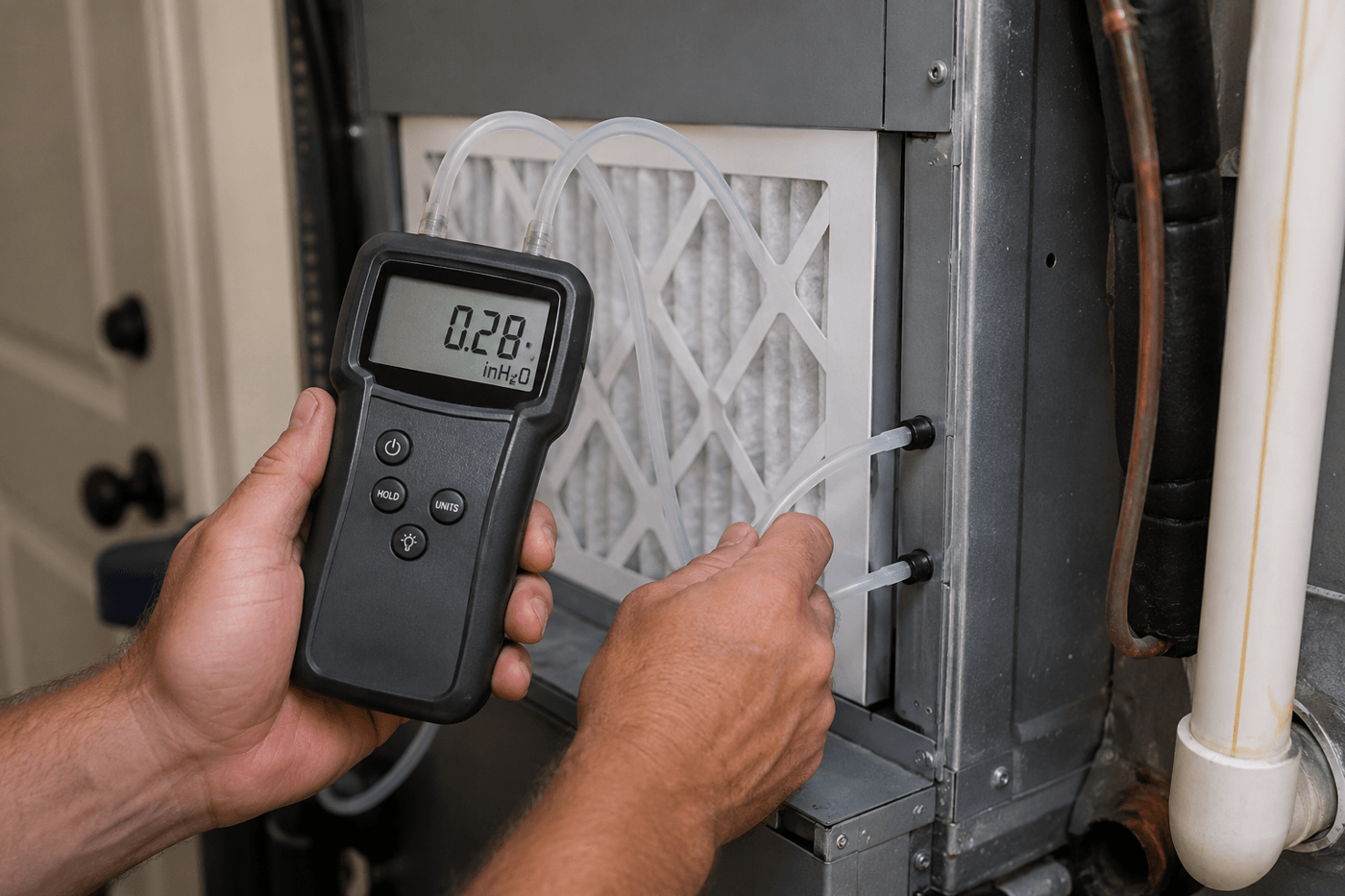
Measure, do not guess. Total external static pressure is the number that answers this question for your specific equipment. It captures everything the blower fights against across the return and supply sides, filter included, and every air handler carries a maximum rated value on its data plate.
Find the manufacturer-rated total external static pressure on the air handler data plate. Many residential units are rated near 0.5 inches water gauge.
Have a technician measure actual static pressure with a manometer, with a clean filter installed in the rack.
Take separate readings upstream and downstream of the filter to isolate the pressure drop across the filter itself.
Compare the total against the rated value. Headroom means MERV 13 is safe in your system. No headroom means you have an existing restriction to fix first.
Re-measure after roughly 60 days of service to see the loaded value, which is the pressure the blower actually lives with most of the time.
That last step matters more than the first four. EPA points out that the operating resistance of a fully dust-loaded filter is the maximum resistance against which the fan operates, so design around the dirty number rather than the clean one.
I have watched this measurement get done badly in two specific ways. A technician takes a single reading at the air handler and calls it total static, which hides whether the restriction sits on the return side or the supply side. Ask for both numbers separately. Then ask for them in writing, because a static pressure reading only becomes diagnostic once you can set it beside the same measurement taken a year later.
How To Read Your Own Static Pressure Numbers
A reading on its own tells you nothing. The useful move is subtraction. Take your total external static pressure, subtract the pressure drop measured across the filter alone, and what remains is every other restriction in the system. That remainder is the number that decides whether your filter choice matters at a
Read that bottom row again. In this example, the ductwork and coil consume the entire rated budget before a filter goes in. Pulling the filter out completely would still leave the system at its limit. Downgrading from MERV 13 to MERV 8 recovers some fraction of 0.11 inches, which changes nothing that matters.
Run the same subtraction on your own house and one of two things happens. Either the remainder sits comfortably below the rated maximum, in which case you have headroom and the filter rating becomes a free choice. Or the remainder is already at or over the rating, in which case no filter you buy will fix it, and the ductwork is where the money belongs.
This is the arithmetic I wish more homeowners saw before they let someone talk them into a weaker filter. It takes one service visit and costs nothing beyond the technician already standing in the basement.
Ask For These Three Numbers
Total external static pressure, measured with a clean filter installed.
Return-side and supply-side readings recorded separately, not combined.
Pressure drop across the filter itself, taken upstream and downstream of the rack.
Any technician carrying a manometer can produce all three in a single visit. Write them on the air handler door in marker so the next reading has something to compare against.
When MERV 13 Is The Wrong Call
Some systems genuinely should not run MERV 13, and pretending otherwise does readers no favors. The disqualifying conditions are almost always structural rather than related to the filter rating itself.
The rack only accepts one-inch filters, and there is no room to add a four-inch cabinet.
Measured static pressure already sits at or above the rated maximum with a clean filter installed.
Return ducts are visibly undersized for the system tonnage, which shows up as a high return-side reading.
An older permanent split capacitor blower is already running near its capacity ceiling.
The homeowner cannot commit to a replacement schedule, which turns any high-efficiency filter into a restriction over time.
In each of those cases, the fix is the underlying restriction, not a downgrade to a weaker filter. A technician can add a return, install a deeper filter cabinet, or adjust the blower tap, and the MERV 13 question resolves itself.
Duct work gets blamed and credited for more than it deserves in both directions. Our earlier review of what duct cleaning actually does for airflow is worth reading before you spend money on either side of that argument.
How Often Should You Replace A Four-Inch MERV 13 Filter?
Manufacturers typically recommend replacement every 60 to 90 days, and EPA repeats that range in its consumer guidance. Four-inch filters generally reach the far end of it because the additional media holds more dust before pressure drop climbs. Households with pets, heavy occupancy, or nearby construction should check monthly and replace on condition rather than on calendar.
Run time changes the math too. EPA notes that residential HVAC systems typically operate less than 25 percent of the time during heating and cooling seasons, so a filter in a lightly used system ages more slowly than the calendar suggests. Pull the panel and look at it. Heavy visible soiling means shorten the interval regardless of what the box says.
EPA's actual instruction is to follow the manufacturer recommendation rather than a generic interval, so the one attached to your size is worth reading. Filterbuy puts the 16x30x4 at two to three months. Treat a figure like that as the ceiling in a clean house and as the opening number in a dusty one.
One figure from the test standard puts replacement timing in perspective. ASHRAE 52.2 loads a MERV 13 filter until it reaches a final resistance of 1.4 inches water gauge before the test ends. That is nearly three times the total pressure budget most residential air handlers are rated for. The filter is built to keep capturing particles long past the point your system can tolerate the resistance, which is precisely why you replace on condition rather than waiting for the panel to reach the end of its own rated life.
The most reliable schedule I recommend is not a calendar at all. Write the install date on the frame in marker, pull the panel at sixty days, and look at it. Two or three rounds of that and you will know your own house better than any manufacturer range can tell you, because your dust load is yours alone.
“We have opened up systems where the homeowner had already downgraded to a cheaper filter on someone’s advice, and the airflow problem was still sitting right there in the return ducts. The filter is the easiest component in the system to blame and close to the last one I would actually suspect.” - Brock Cottew, Vent-Cleaning.net Author
Seven Sources That Settle The MERV 13 Airflow Question
Each source below answers one question this article raises but cannot settle for your specific system. Read them in order, and you will not have to guess at the rating or the replacement interval.
1. See Exactly What The MERV 13 Label Certifies
ASHRAE Standard 52.2 is the test method that defines MERV. Table 12-1 lists the efficiency a filter must reach in each of three particle size ranges to earn a MERV 13 rating.
Use It For: Confirming what the number on your filter box actually guarantees.
Source: ANSI/ASHRAE Standard 52.2-2017 (public copy)
2. Catch The Rack Problem That Ruins A Good Filter
CDC NIOSH recommends upgrading central HVAC filters to MERV 13 or better. Its inspection guidance tells readers to check filter housings and racks so air cannot travel around the panel instead of through it.
Use It For: Diagnosing bypass before blaming the filter rating.
Source: CDC NIOSH, Improving Air Cleanliness
3. Know What A Filter Will Not Fix Before You Buy
The American Lung Association ranks filtration third, behind source control and ventilation. The page states directly that air cleaning does not substitute for either one.
Use It For: Setting realistic expectations before paying for a higher rating.
Source: American Lung Association, Air Cleaning
4. Read The Clinical Evidence That Pleating Solves Pressure Loss
This peer-reviewed study in the Journal of Allergy and Clinical Immunology states that concerns about pressure loss across a filter are alleviated by pleating. It also notes that poorly fitted filters allow significant air leakage around the panel.
Use It For: Clinical backing for choosing more depth over a lower rating.
Source: Sublett et al., Air Filters and Air Cleaners (PMC2824428)
5. Hold Your Technician To A Written Standard
The ENERGY STAR maintenance checklist lists every task a technician should perform on an annual visit, including cleaning and adjusting blower components to provide proper system airflow.
Use It For: Backing up your request for a static pressure reading at the next service call.
Source: ENERGY STAR, Maintenance Checklist
6. Match Your Rating To The Particles In Your House
The Asthma and Allergy Foundation of America catalogs indoor allergens by source and by size in microns.
Use It For: Deciding whether MERV 11 or MERV 13 targets what is actually causing symptoms.
Source: AAFA, Control Indoor Allergens
7. Learn Which Days Your MERV 13 Filter Earns Its Cost
AirNow publishes the particle pollution Air Quality Index table and notes that high outdoor particle levels raise indoor levels too.
Use It For: Timing longer fan run cycles to the days that actually warrant them.
Source: AirNow, Air Quality Guide for Particle Pollution
Supporting Statistics
Three federal and national-laboratory findings behind the argument above.
1. Two-Thirds Of U.S. Households Run Central AC Or A Central Heat Pump
88 percent of U.S. households use air conditioning.
Two-thirds run central AC or a central heat pump as their main equipment.
Drawn from 18,496 responding households, the largest sample in the survey history.
Why It Matters: Those homes all have a filter rack, so this decision reaches most of the country.
Source: U.S. Energy Information Administration, 2020 Residential Energy Consumption Survey
2. Residential Air Handlers Operate At Only 10 To 15 Percent Efficiency
Typical residential air handlers reach just 10 to 15 percent efficiency.
Weak electric motors and aerodynamically poor fans and fan housings cause the loss.
Performance dropped further when clearance around the air handler cabinet was reduced.
Why It Matters: The blower is already the weakest link, so static pressure headroom is scarce and worth measuring first.
Source: Walker, Improving Air Handler Efficiency in Houses, LBNL (ACEEE Summer Study, 2004)
3. The United States Recorded 77,850 Wildfires In 2025
77,850 wildfires burned 5,131,474 acres nationally in 2025.
The fire count ran noticeably above the five- and ten-year averages. The ten-year average is 62,435.
Acres burned finished more than two million below average, so fires were more numerous but smaller.
Why It Matters: More ignitions across more regions means more smoke days, and PM2.5 from smoke is what MERV 13 targets.
Source: National Interagency Fire Center, Wildland Fire Summary and Statistics Annual Report 2025
Final Thoughts And Opinion
Depth governs how hard a filter makes your blower work more than the MERV number does, which resolves most of the fear around running MERV 13 in a 16x30x4 rack.
What The Evidence Supports
Four inches of depth gives MERV 13 enough media area to be a non-event in most residential systems.
EPA confirms most furnaces and HVAC systems handle MERV 13 without equipment problems when the filter gets replaced on schedule.
Static pressure, measured on your own equipment, settles the question definitively.
Replacement cadence keeps it settled, because a loaded filter restricts airflow at any rating.
The Order Of Operations I Recommend
Seal and size the return side first.
Measure total external static pressure with the system open.
Buy the highest rating your headroom allows, which in a four-inch rack is usually MERV 13.
Run backward; that sequence has homeowners paying for filtration their ductwork quietly bypasses.
Frequently Asked Questions
Q: Will A MERV 13 Filter Void My HVAC Warranty?
A: Generally no. Manufacturer documentation specifies a maximum static pressure the equipment is rated for, not a maximum MERV rating. Check your air handler manual for that pressure limit and confirm your measured reading stays under it. Warranty language addresses how hard the blower works, not how well the filter filters.
Q: Can I Put A Four-Inch Filter In A One-Inch Slot?
A: No. A four-inch filter needs a rack built for that depth. Forcing a thicker panel into a one-inch slot bends the frame, breaks the seal, and lets air bypass the media entirely. A technician can install a deeper filter cabinet if you want the four-inch depth and your plenum has room for it.
Q: Does A Dirty MERV 13 Filter Restrict Airflow More Than A Dirty MERV 8?
A: Both climb as they load. EPA notes that the operating resistance of a fully dust-loaded filter is the maximum resistance the fan works against, which is why the replacement schedule matters more than the starting rating. A four-inch panel holds more dust before reaching that point than a one-inch panel does.
Q: How Do I Know If My Return Ducts Are Undersized?
A: A technician measures return-side static pressure separately from supply-side. A high return reading taken with a clean filter installed points to undersized or restricted return ducts rather than to the filter. Adding a second return or upsizing the existing one addresses the actual cause.
Q: Can I Improve Airflow By Running No Filter At All?
A: No, and the bill arrives later. With an empty rack, dust deposits straight onto the evaporator coil and blower wheel, where it insulates the coil and throws the wheel out of balance. Coil cleaning costs more than several seasons of filters. EPA notes that the cheapest panel filters exist mainly to protect that equipment rather than to clean your air, which tells you what happens when nothing is protecting it.
Q: Does A Four-Inch Filter Cost More Per Year Than A One-Inch?
A: Often less, once you count changes instead of units. A one-inch panel in a typical household gets replaced four to six times a year. A four-inch panel at the same rating holds more dust before pressure drop climbs and usually lands at two to four changes. Multiply your own unit price by your own change count before deciding which one is actually cheaper.
Q: Is MERV 13 Worth It If Nobody In The House Has Allergies?
A: EPA recommends at least MERV 13 for capturing the fine particles of greatest health concern, including PM2.5 from cooking, wildfire smoke, and outdoor traffic pollution. Those exposures reach every household regardless of allergy status, so the case for MERV 13 does not depend on anyone having symptoms.
Take The Measurement Before You Change The Filter
Whether MERV 13 16x30x4 air filters restrict airflow in your system is a question your own static pressure reading answers in about fifteen minutes. Ask your technician to pull that number at the next service visit, then match the filter to the headroom you actually have.
Glossary
MERV
Minimum Efficiency Reporting Value, a rating defined by the ASHRAE 52.2 test standard that describes how effectively a filter captures particles between 0.3 and 10 microns. It measures capture efficiency and says nothing directly about airflow resistance. EPA publishes the full MERV threshold table by particle size, which shows that MERV 13 has to capture at least 50 percent of particles in the 0.3 to 1.0 micron range.
Nominal Size
The rounded label printed on a filter, such as 16x30x4. It identifies the rack the filter is built to fit rather than the measured dimensions of the panel.
Actual Size
The measured dimensions of the filter panel itself, typically about half an inch under nominal on the face and slightly under on depth so the panel can slide into its rack.
Pressure Drop
The difference in air pressure measured upstream and downstream of a filter, reported in inches of water gauge. It rises continuously as the filter loads with dust.
Total External Static Pressure
The combined resistance a blower works against across both the return and supply sides of a system, filter included. Air handler data plates list a maximum rated value for this figure.
Filter Bypass
Air that travels around the edges of a filter instead of through the media, usually caused by a loose fit or a bent panel. Bypass reduces filtration without reducing airflow, which makes it easy to miss.
Learn more about HVAC Care from one of our HVAC solutions branches…
Filterbuy HVAC Solutions - Miami FL - Air Conditioning Service
1300 S Miami Ave Apt 4806 Miami FL 33130
(305) 306-5027
https://maps.app.goo.gl/Ci1vrL596LhvXKU79