Pull a filter after a season in the return and hold it up to the light. You can almost read the months off it: gray dust, pet hair, a film of pollen nobody in the house ever saw floating around. That’s the whole point of the thing, and it’s also the part most of us skip. We grab a filter by price or by whatever fits, slot it in, and forget that every breath at home still passes through it. This size makes the call trickier, because you’ll rarely spot a properly sized 12x14x1 air filter on a store shelf, so ordering online tends to be the smarter route. After years of watching these panels work, I can tell you two filters with the same printed size can behave nothing alike once they’re seated. Figure out why, and you protect three things at once: your air, your budget, and the system that moves it. The payoff is breathing cleaner air at home, and that’s reason enough to slow down for a minute before you buy.
TL;DR Quick Answers
- Size: a 12x14x1 actually measures about 12 by 14 by 0.75 inches. Confirm it against your old filter’s frame.
- Rating: a mid-grade pleated filter suits most homes, with a step up for allergies or pets. It helps to know how filter ratings work before you choose.
- Airflow: a higher MERV catches more, so comparing filtration levels keeps you from starving an older blower.
- Replacement: figure on every ninety days, sooner with pets or heavy use.
- Buying online: pick listings that show the actual size and MERV, and order a multipack so you’re never caught short.
Top Takeaways
- Read the size stamped on your current filter’s frame before you order, since a 12x14x1 runs closer to 12 by 14 by three quarters of an inch.
- Match the MERV to your household, with a pleated option capturing everyday household dust on every cycle.
- Look for a rigid frame and a high pleat count defending against household dust with a tighter seal and a longer life.
- Swap pleated filters about every ninety days, sooner if you have pets or allergies.
- Buy odd sizes in a multipack so you’re always reducing indoor dust buildup without a gap.
What I Actually Check Before I Buy
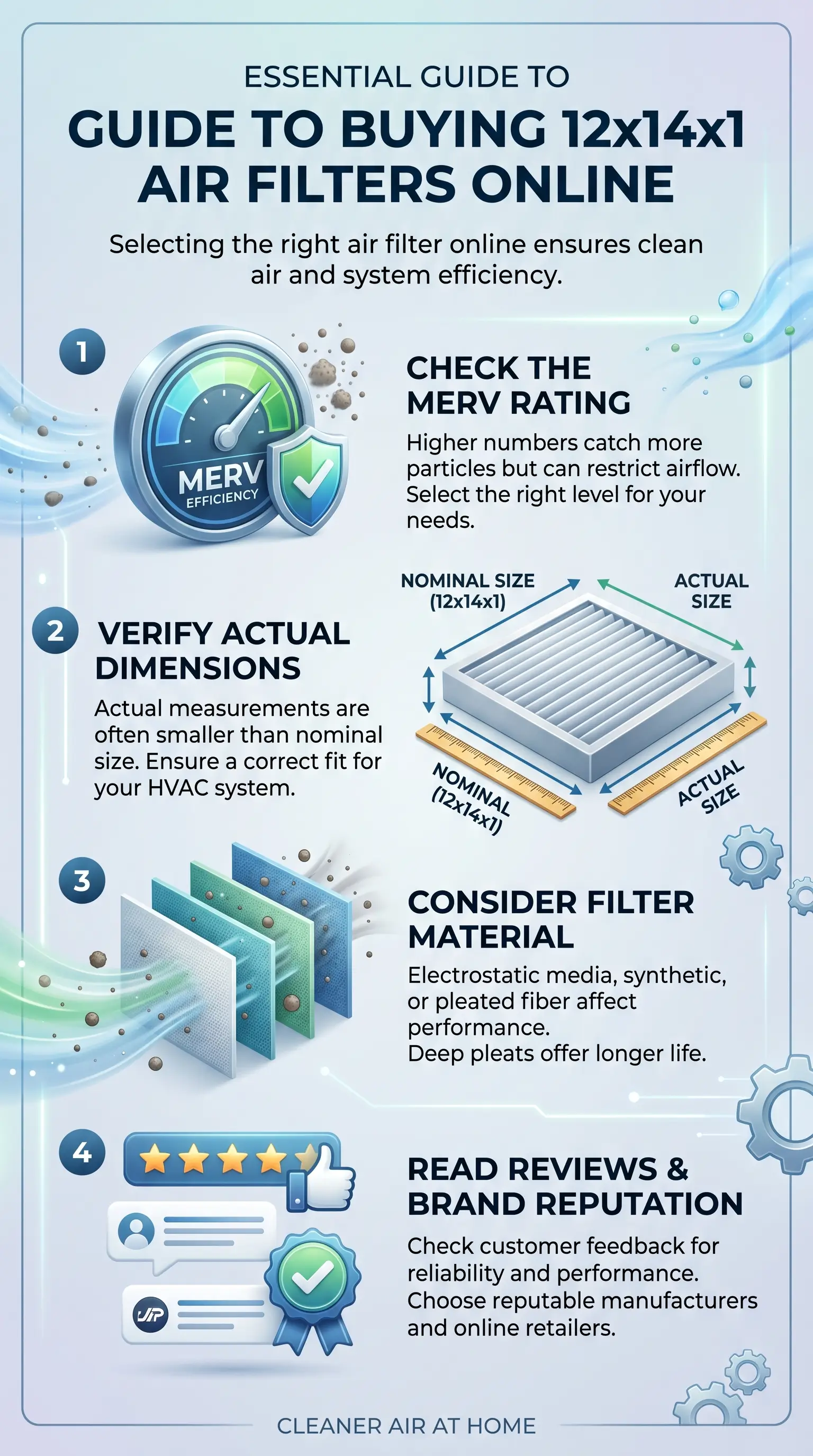
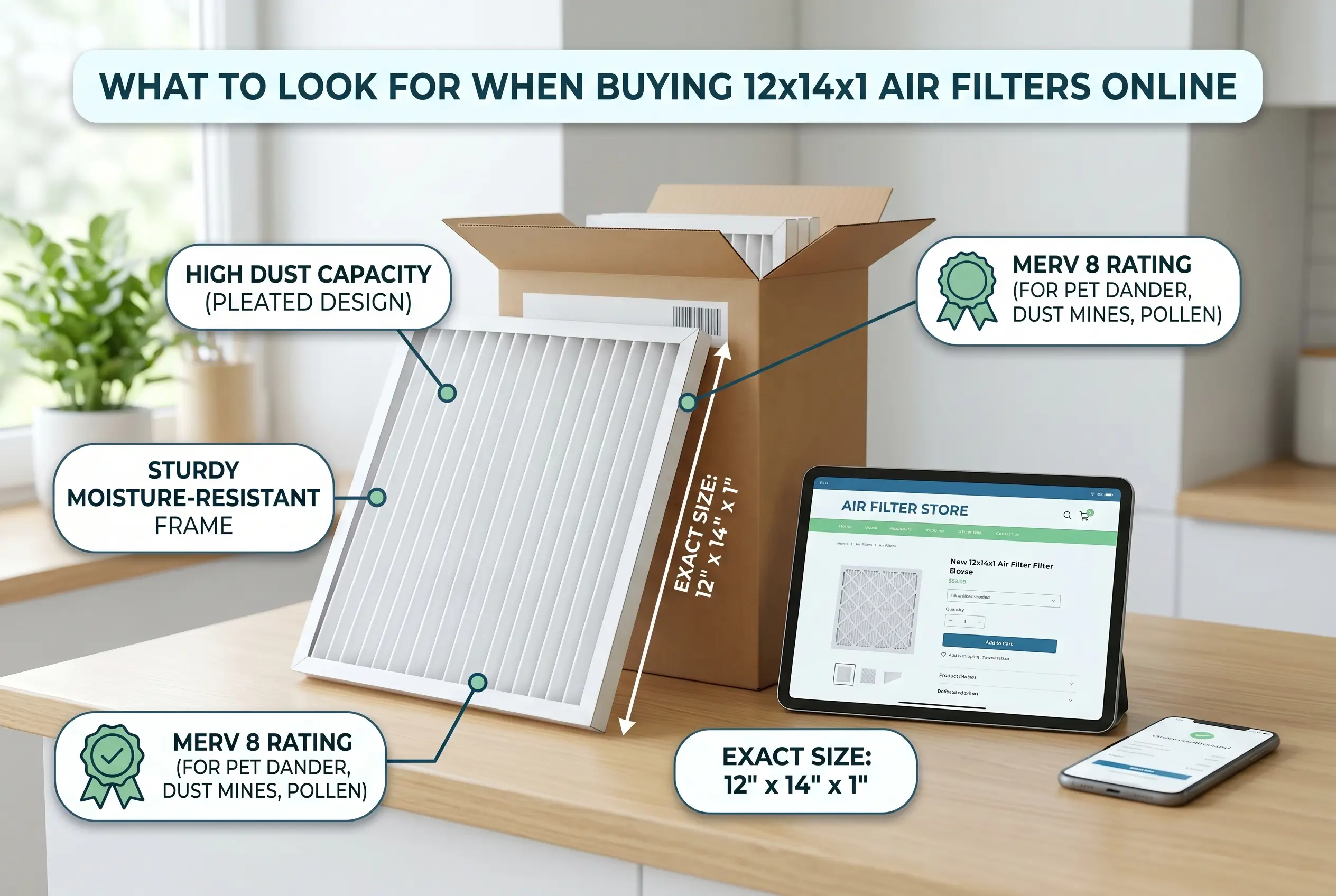
Start with size, because the number on the box isn’t the real one. A filter sold as 12x14x1 usually measures closer to 12 by 14 by three quarters of an inch in the slot. That gap between nominal and actual is normal across the industry, so skip the guesswork. Pull your current filter and read the size printed on its cardboard frame. When the listing matches that stamp, you’ve got the right part. An air filter does work you never see, and how well it does that work comes down to details the label rarely mentions.
After size, the rating carries the most weight. MERV, short for minimum efficiency reporting value, tells you how small a particle the media can catch. For most homes, a mid-grade pleated filter handles dust, lint, and pollen without choking airflow. Stepping up to finer filtration makes sense when someone in the house fights allergies or asthma, since denser media grabs the small stuff like dander and fine smoke. The top residential tiers pull the most from the air, but they also lean harder on the blower. If your system has some age on it or your ducts run tight, the finest filter isn’t always the kindest choice for the equipment.
Build quality is the part shoppers tend to skip, and I think it matters as much as the rating. More pleats mean more surface area, trapping more airborne particles and stretching the time before the filter clogs. I want a rigid board frame, not flimsy stock that bows and lets air sneak around the edges. A filter that buckles in the return leaks unfiltered air straight past the media, no matter how good that media is.
Buying online adds its own short checklist. I check that the seller lists the actual dimensions, the MERV, and where the filter is made. I look for honest guidance on when to change it instead of a vague promise. A clean filter also works best behind clean ducts, so professional duct cleaning earns its place when the system has been neglected. And I order a small multipack, so I’m not back online every few weeks.
“In my years on service calls, the filters that fail early almost always fail at the frame, not the media, so I match the size first and seat it square long before I worry about the rating.”
Seven References Worth Bookmarking Before You Buy
These are the sources I trust when I want to check a claim about filters or indoor air. None of them are trying to sell you anything.
- EPA, The Inside Story: A Guide to Indoor Air Quality. A plain-language look at what’s in your home’s air and where filtration fits in.
- U.S. Department of Energy, Air Conditioner Maintenance. Why a clean filter protects both airflow and your energy bill.
- ENERGY STAR, Heat and Cool Efficiently. Filter and system habits straight from the federal program.
- American Lung Association, Air Cleaning. How HVAC filters and MERV ratings tie into lung health.
- National Institute of Environmental Health Sciences, Indoor Air Quality. The research view of indoor pollutants and exposure.
- CDC, Taking Steps for Cleaner Air. Simple home steps, including pleated filters and sensible change intervals.
- National Air Filtration Association, Publications. Industry guides that explain MERV and filter testing in depth.
Three Numbers That Changed How I Shop
- The EPA estimates Americans spend about 90 percent of their time indoors, where some pollutants run two to five times higher than the air outside. That’s a lot of hours breathing whatever your filter lets slip past.
- The U.S. Department of Energy reports that swapping a clogged filter for a clean one can cut an air conditioner’s energy use by as much as 15 percent.
- By the ENERGY STAR count, close to half of the energy a typical home uses goes to heating and cooling, and your filter sits right in that path.
My Honest Take After Years of Filter Shopping
If I had to boil it down to one habit, here it is. Get the size right, buy the best filter your system can move air through without strain, and change it on schedule. Keeping your ductwork clean backs that up, because even a great filter can’t make up for a dirty system. And if your equipment is getting on in years, professional installation help can bring back the airflow a good filter counts on. Order a season’s worth at once, and the right part is always in the closet when you need it.
Frequently Asked Questions
Is 12x14x1 a common air filter size?
It’s less common than sizes like 16x20x1, which is exactly why people order it online instead of hunting local shelves. The size is standard. It just isn’t stocked everywhere.
What MERV rating should I choose for a 12x14x1 filter?
For most homes, a mid-grade pleated filter balances clean air with steady airflow. Move up a tier for allergies or pets, and for extra particle control, some homeowners pair a good filter with adding an air ionizer.
Does a higher MERV filter reduce airflow?
It can, especially in an older system. Denser media restricts air more, so the best filter is the finest one your blower can still push air through without strain. If airflow stays weak after a fresh filter, experienced repair technicians can check the system’s static pressure.
How often should I replace a 12x14x1 air filter?
Plan on about every ninety days under normal use, and eyeball it monthly during heavy heating or cooling stretches. If you change it on time and still see dust or weak airflow, trusted repair specialists can dig deeper.
Why is the actual size smaller than 12x14x1?
Nominal sizing is just an industry rounding habit. The real panel runs a hair under, near three quarters of an inch thick, so it seats cleanly in the slot.
Buy the Right 12x14x1 Filter With Confidence
Knowing what to look for turns filter shopping from a guess into a quick, confident order. Match your size, pick the rating your system can handle, keep a season’s worth on hand, and lean on local HVAC repair help if your setup ever needs more than a fresh filter.
Learn more about HVAC Care from one of our HVAC solutions branches…
Filterbuy HVAC Solutions - Miami FL - Air Conditioning Service
1300 S Miami Ave Apt 4806 Miami FL 33130
(305) 306-5027
https://maps.app.goo.gl/Ci1vrL596LhvXKU79